Swimming pools in the front yard

Swimming pools in the front yard

Swimming pools in the front yard

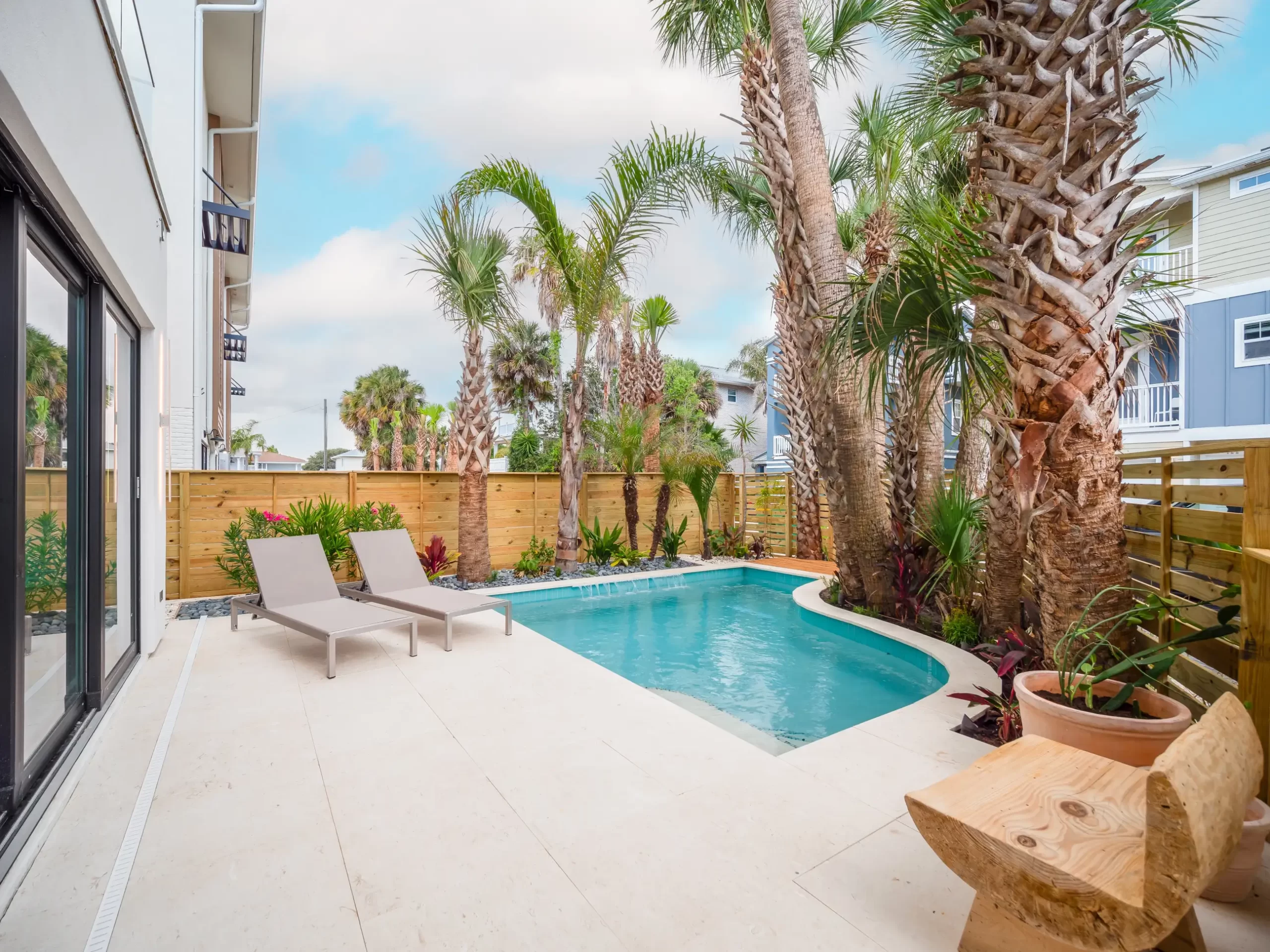
In New South Wales (NSW), Queensland, and Victoria, the placement of a swimming pool in the front yard is subject to strict regulations. Whether or not you can build a pool in the front yard will depend on local council regulations, setback rules, and safety standards.

Swimming pools in the front yard
  1. New South Wales (NSW)

In NSW, swimming pools must comply with the Swimming Pools Act 1992 and Swimming Pools Regulation 2018. Local councils often have specific setback requirements that determine how close to property boundaries and roads a pool can be placed.

  • Front Yard Restrictions: Many councils in NSW may discourage or restrict the placement of pools in front yards due to aesthetic and safety concerns.
  • Setback Requirements: Typically, pools must be located a certain distance from the street, and fencing around the pool must comply with safety standards.
  • Check with Local Council: Before proceeding, it’s essential to check with your local council for specific rules regarding front yard pools. Councils will require a development application (DA) for approval.
  1. Queensland

Queensland’s pool regulations are governed by the Building Act 1975 and enforced by local councils and the Queensland Building and Construction Commission (QBCC). The placement of a pool in the front yard is subject to zoning and setback regulations.

  • Pool Safety: The pool must be enclosed by a compliant safety barrier, and there may be additional fencing requirements if the pool is near a public road or sidewalk.
  • Setbacks and Visibility: The pool’s location must meet setback requirements from property boundaries and streets, and local councils may restrict front yard pools for aesthetic reasons.
  1. Victoria

In Victoria, pool placement is governed by the Building Act 1993 and Building Regulations 2018. Similar to NSW and Queensland, local councils set the rules regarding the placement of pools, including in front yards.

  • Front Yard Pool Restrictions: Many councils in Victoria may restrict pools in front yards, requiring specific setbacks from the street. Additionally, any pool built in the front yard must comply with fencing and safety barrier regulations.
  • Safety and Permits: As in other states, a building permit is required for any pool installation, and fencing around the pool must meet the mandatory safety standards.

Key Considerations Across All States

  • Setbacks: In NSW, Queensland, and Victoria, setback requirements ensure that the pool is positioned a safe distance from property boundaries, streets, and other structures.
  • Safety Barriers: A compliant safety barrier, typically at least 1.2 meters in height or 1.8m high on boundaries, is required to surround the pool. Self-closing and self-latching gates must also be installed.
  • Permits: Always check with your local council to see if you need a development application or building permit before proceeding with any pool installation, especially in the front yard.

Conclusion

Building a pool in the front yard may be possible, but it depends on local regulations, safety requirements, and council approvals in NSW, Queensland, and Victoria. Always consult your local council to ensure compliance with all rules and regulations before starting your project.

Benefits of Pool Equipment Storage

Benefits of Pool Equipment Storage

Benefits of Pool Equipment Storage

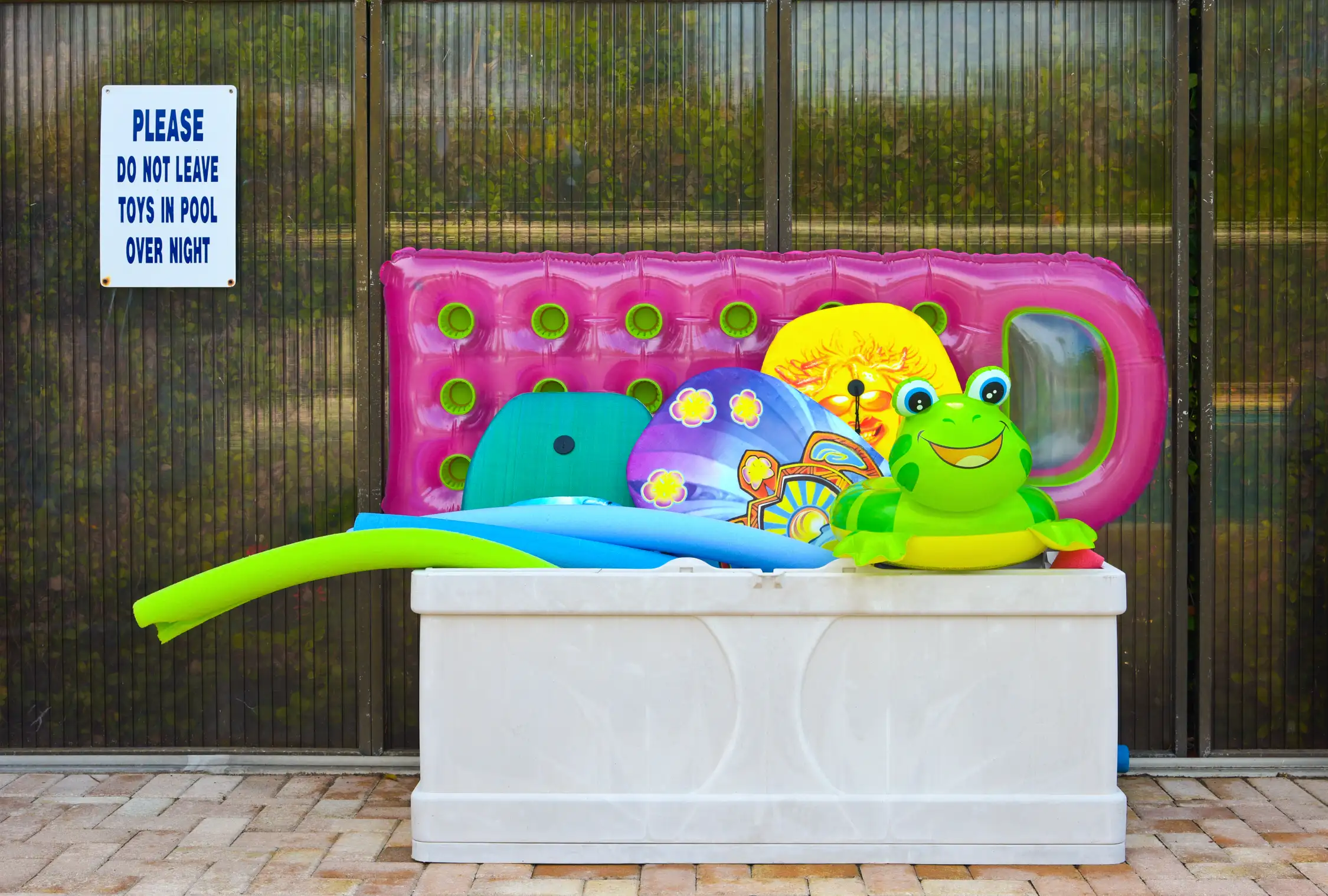
Properly storing pool equipment not only keeps your pool area organised but also extends the life of your equipment, improving safety and reducing maintenance time. Here are the key benefits of having a dedicated space for pool equipment storage:

Benefits of Pool Equipment Storage
  1. Protects Equipment from Weather Damage

Pool equipment like pumps, filters, hoses, and cleaning tools are exposed to the elements if left outside. Storing equipment in a covered, dedicated space protects it from sun, rain, and temperature fluctuations that can lead to damage, rusting, or deterioration.

  • Increased Longevity: Protecting equipment from UV rays, rain, and extreme temperatures extends its lifespan, preventing wear and tear that could cause expensive repairs or replacements.
  1. Improves Safety

Pool chemicals and equipment like cleaning tools and vacuums can pose safety risks if not stored properly.

  • Child Safety: Keeping chemicals (like chlorine) and tools locked away in a designated storage area prevents children or pets from accessing hazardous substances or sharp objects.
  • Preventing Trips and Falls: A clutter-free pool area reduces the risk of trips and falls around the pool deck, which can be especially important for households with children or frequent pool visitors.
  1. Reduces Clutter and Enhances Aesthetics

By using dedicated pool equipment storage, you can keep the poolside free from clutter, creating a clean and organised look for your outdoor space.

  • Tidy Pool Area: Storing hoses, nets, and other tools out of sight helps maintain a neat appearance, making your pool area more inviting and pleasant for guests.
  • More Space: With tools and equipment stored away, there’s more room around the pool for relaxation and recreation, enhancing the aesthetic appeal of your pool area.
  1. Easier Access and Organisation

Having a designated storage area for all your pool equipment keeps everything in one place, making it easier to find what you need.

  • Organised Storage: Storing equipment like skimmers, brushes, and test kits in labelled bins or shelving helps keep everything organized, saving time when it comes to pool maintenance.
  • Quick Access: With a dedicated storage space, you’ll have quick access to your pool essentials, making it easier to maintain and clean the pool regularly.
  1. Prevents Equipment Deterioration

Pool equipment can degrade more quickly if not stored properly, especially hoses and tools that are regularly exposed to chlorine and water.

  • Prevents Corrosion: Storing metal parts like pumps and heaters in a dry, enclosed space helps prevent corrosion from exposure to pool water and chemicals.
  • Minimises Wear and Tear: Regularly storing delicate or fragile equipment like test kits, pool covers, and small accessories prevents unnecessary wear and tear.
  1. Enhances Poolside Organization for Chemicals

Chemicals used for pool maintenance need to be stored carefully to avoid dangerous reactions or spills.

  • Safe Chemical Storage: A well-ventilated, cool, and dry storage space ensures that pool chemicals like chlorine, pH balancers, and algaecides are kept safe from accidental spills, contamination, or mixing.
  • Compliance with Safety Guidelines: Storing chemicals in accordance with pool safety guidelines can also help you avoid potential hazards, such as chemical fires or harmful gas leaks.

Conclusion

Investing in a dedicated pool equipment storage solution helps keep your pool area tidy, enhances safety, and protects your equipment from the elements. Whether you use a storage shed, a locker, or cabinets, having an organised system for storing pool tools and chemicals ensures easier pool maintenance and a more pleasant, clutter-free poolside experience.

Benefits of Pool Covers

Benefits of Pool Covers

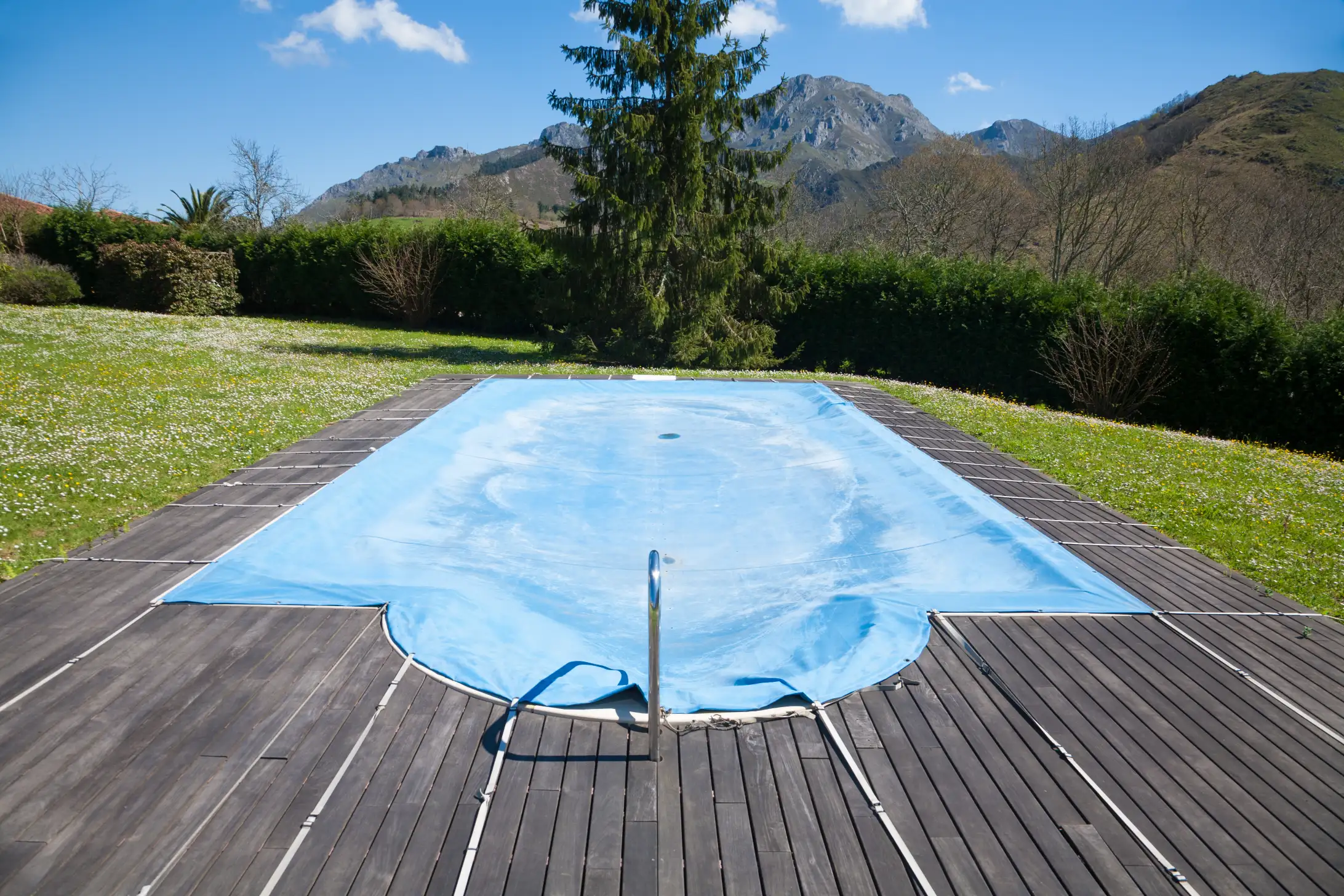
Pool covers offer a wide range of benefits, helping pool owners save on energy, water, and maintenance costs while also enhancing safety and overall pool management. Here’s an overview of the key benefits:

  1. Energy Efficiency and Heat Retention

One of the most significant advantages of using a pool cover is its ability to retain heat and improve the overall energy efficiency of your pool.

  • Heat Retention: Pool covers trap heat in the water, which is particularly beneficial for heated pools. By keeping the water warmer, they reduce the need for frequent heating, allowing you to maintain comfortable swimming temperatures for longer.
  • Energy Savings: Pool covers help reduce energy consumption by limiting the amount of heat that escapes through evaporation. This can lead to considerable energy savings, especially for pools that rely on gas or electric heating systems.
  1. Water Conservation

Pool covers help limit water evaporation, which is one of the primary causes of water loss in pools.

  • Reduced Evaporation: By covering the pool when it’s not in use, you can dramatically reduce the amount of water that evaporates, especially in hot and windy climates. This reduces the need for frequent top-ups, helping conserve water.
  • Lower Chemical Usage: Since less water is lost through evaporation, fewer chemicals are needed to maintain the correct water balance. This can lead to significant savings in the cost of pool chemicals over time.
  1. Cleaner Pool, Less Debris

A pool cover acts as a partial barrier against leaves, dirt, and debris from entering the pool, helping to maintain cleaner water with less effort.

  • Cleaner Pool: By covering your pool, you limit external debris from falling in, which reduces the time spent on cleaning and vacuuming. This also helps extend the lifespan of your pool’s filtration system by preventing it from becoming clogged with dirt and debris.
  • Fewer Chemicals: With a cleaner pool, you will also need fewer chemicals to balance the water chemistry, as the introduction of organic matter (like leaves) is minimised.
  1. Enhanced Safety

Certain pool covers, especially safety covers, provide an additional layer of protection, making your pool safer for children, pets, and wildlife.

  • Child and Pet Safety: Safety pool covers are designed to support a significant amount of weight, reducing the risk of accidental drowning. While they don’t replace the need for fencing, they add an extra layer of security by preventing access to the water when the pool is not in use.
  1. Lower Maintenance and Operating Costs

Using a pool cover reduces both maintenance efforts and operating costs over time.

  • Reduced Equipment Wear: By keeping debris out of the pool and reducing the strain on your pool’s filtration and heating systems, pool covers help extend the lifespan of these components, saving you money on repairs and replacements.
  • Lower Heating and Chemical Costs: Less heat loss and reduced evaporation mean that you’ll spend less on heating and chemicals. This leads to lower overall maintenance costs and less frequent pool servicing.

Conclusion

Pool covers are an essential tool for any pool owner, offering multiple benefits such as energy efficiency, water conservation, cleanliness, safety, and cost savings. Whether you’re aiming to save on heating bills, reduce water wastage, or make your pool area safer, a pool cover is a worthwhile investment that pays off in the long run.

Pool Covers: Underground Rollers and Blankets vs. Above-Ground Rollers and Blankets

Pool Covers Underground Rollers and Blankets vs. Above-Ground Rollers and Blankets

Pool Covers: Underground Rollers and Blankets vs. Above-Ground Rollers and Blankets

Pool covers are essential for maintaining water temperature, reducing evaporation, and keeping debris out of your pool. They come in different types, including underground rollers with blankets and above-ground rollers with blankets. Each system offers distinct advantages depending on your needs and pool setup.

Pool Covers Underground Rollers and Blankets vs. Above-Ground Rollers and Blankets
  1. Underground Rollers with Blankets

Underground roller systems are designed to hide the pool cover roller mechanism below ground, offering a more seamless and aesthetic solution.

  • How It Works: The roller mechanism is installed in a chamber below the pool level at one end of the pool. The pool blanket is manually retracted or deployed, making it a convenient option for pool owners who prefer a clean and uncluttered appearance around the pool.
  • Pros:
    • Aesthetic Appeal: Underground rollers are hidden, keeping the pool area visually clean and free from bulky equipment.
    • Convenience: These systems often come with automatic mechanisms, making it easy to cover or uncover the pool with minimal effort.
    • Safety: Because the mechanism is below ground, there is no risk of tripping over or damaging the roller system.
  • Cons:
    • Higher Cost: Underground roller systems are more expensive due to the need for excavation and installation below ground.
    • Complex Installation: Installing the system requires significant structural work, which can be more time-consuming and costly.
  • Best For: Pool owners who prioritise aesthetics and convenience, and who are willing to invest in a more complex, integrated system.
  1. Above-Ground Rollers with Blankets

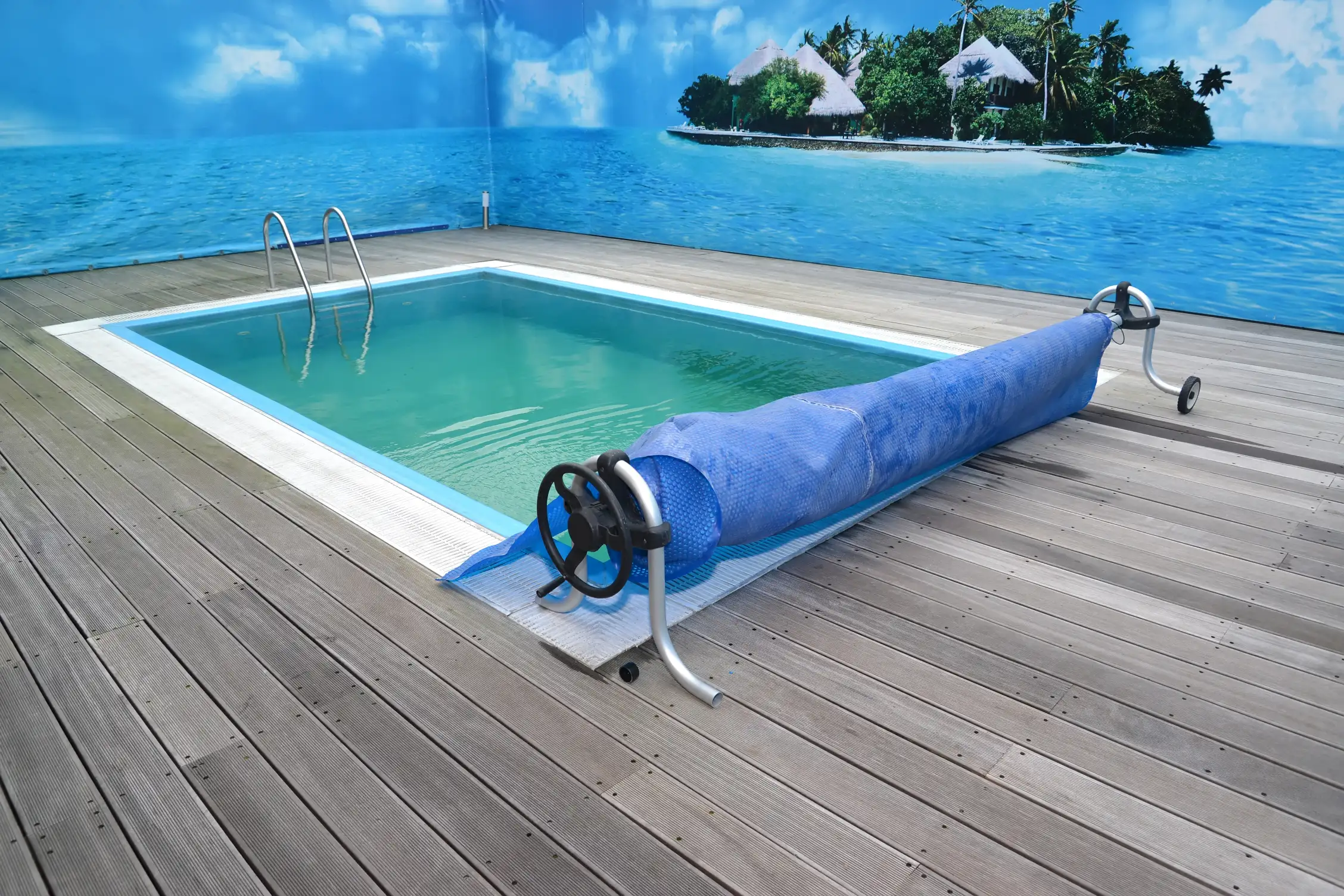
Above-ground roller systems are the more traditional and common option, where the roller is placed on the pool deck and is used to manually roll up or unroll the pool blanket.

  • How It Works: The pool blanket is attached to an above-ground roller system, which allows the blanket to be manually rolled up or deployed over the pool.
  • Pros:
    • Affordability: Above-ground rollers are far less expensive than underground systems because they don’t require any structural modifications or complex installation.
    • Easy Installation: Installation is straightforward and can often be done without professional assistance.
    • Portable: The rollers can be moved around the pool area, providing flexibility in placement.
  • Cons:
    • Bulkier Appearance: Above-ground rollers can take up space around the pool and may not be as visually appealing as underground systems.
    • Manual Effort: Many still require manual operation, which can be inconvenient for frequent use.
  • Best For: Pool owners looking for an affordable and simple solution, or those who don’t mind a visible roller system on their pool deck.

Which Pool Cover System Is Right for You?

  • Underground Rollers with Blankets: Ideal for those seeking a sleek, hidden system that is easy to operate, but willing to invest in a more costly and complex installation.
  • Above-Ground Rollers with Blankets: Suitable for budget-conscious homeowners who prefer a simpler, more portable option, with minimal installation requirements.

Pool Safety Standards in New South Wales, Queensland, and Victoria

Pool Safety Standards in New South Wales, Queensland, and Victoria

Pool Safety Standards in New South Wales, Queensland, and Victoria

In Australia, pool safety standards are stringent to prevent accidents, particularly for young children. These standards focus on barriers, fencing, gates, and compliance inspections. Here’s a detailed look at the pool safety requirements for New South Wales (NSW), Queensland, and Victoria:

Pool Safety Standards in New South Wales, Queensland, and Victoria
  1. New South Wales (NSW) Pool Safety Standards

In NSW, the Swimming Pools Act 1992 and Swimming Pools Regulation 2018 govern pool safety. The main focus is on ensuring that pools are properly fenced to prevent unsupervised access by children.

  • Key Requirements:
    • Fencing: All pools must have a compliant fence that is at least 1.2 meters high. Gaps between vertical bars must not exceed 100mm, and the gap between the ground and the bottom of the fence must be no more than 100mm.
    • Gates: Pool gates must be self-closing and self-latching, with the latch located at least 1.5 meters above ground.
    • CPR Signage: A CPR sign must be visible near the pool.
    • Registration: All pools must be registered on the NSW Swimming Pool Register, and non-compliant pools can lead to fines.
  • Inspections: Pool barriers are subject to inspections, especially when selling or leasing a property. If a pool is deemed non-compliant, it must be rectified before the transaction can proceed.
  • Penalties: Non-compliance can result in fines of up to $5,500.
  1. Queensland Pool Safety Standards

In Queensland, pool safety is regulated under the Building Act 1975 and enforced by the Queensland Building and Construction Commission (QBCC). The main goal is to ensure that pools are safe and meet the required barrier standards.

  • Key Requirements:
    • Fencing: Pool barriers must be at least 1.2 meters high, with gaps between fence panels no more than 100mm. The ground clearance under the fence should also be less than 100mm.
    • Gates: Gates must be self-closing and self-latching, with latches positioned at least 1.5 meters from the ground.
    • Pool Safety Certificate: A Pool Safety Certificate is required when selling or renting out a property with a pool.
    • CPR Signage: A CPR sign must be displayed prominently near the pool area.
  • Inspections: Pools must be inspected and certified by licensed inspectors, especially before selling or leasing. A valid pool safety certificate is necessary for these transactions.
  • Penalties: Fines of up to $20,000 can be imposed for non-compliance, and owners may be required to make their pools compliant within a set timeframe.
  1. Victoria Pool Safety Standards

Victoria’s pool safety is regulated under the Building Act 1993 and Building Regulations 2018. Pool safety standards emphasize the importance of compliant barriers and regular inspections.

  • Key Requirements:
    • Fencing: All pools must have a fence of at least 1.2 meters in height. Gaps in the fence should not exceed 100mm, and the gap between the ground and the fence should be no more than 100mm.
    • Gates: Pool gates must self-close and self-latch, with the latch positioned 1.5 meters above ground level.
    • CPR Signage: Similar to other states, a CPR sign must be installed near the pool area.
    • Registration: All pools must be registered with the local council, and non-compliance must be rectified within 60 days.
  • Ongoing Compliance: Victorian law requires mandatory inspections of pool barriers every four years to ensure continued compliance. The inspection ensures that the barriers are functional and meet current safety standards.
  • Penalties: Failure to comply with safety standards can result in fines of up to $1,652, and pools that are non-compliant may face additional legal consequences.

Summary of Safety Standards by State:

State

Key Focus Areas

Inspections

Penalties

NSW

Fencing, CPR signage, gate requirements, registration

Required before property sale or lease

Up to $5,500

Queensland

Fencing, Pool Safety Certificate, CPR signage

Required before sale, lease, or pool construction completion

Up to $20,000

Victoria

Fencing, gate height, CPR signage, 4-year inspections

Mandatory inspections every 4 years

Up to $1,652

Pool owners in all three states must ensure their pools meet local safety regulations, including compliant barriers, self-closing gates, CPR signage, and proper registration. Regular inspections ensure pools remain safe and prevent potential accidents.

Always consult local council regulations for the most up-to-date information and make sure your pool complies with all state-specific requirements.

How do I register a pool?

How do I register a pool

How do I register a pool?

Registering a swimming pool is a legal requirement in many areas to ensure compliance with safety standards, particularly regarding fencing and barriers to prevent accidents. The process for registering a pool varies slightly depending on the region, but here’s a general guide on how to register your pool in New South Wales (NSW), Queensland, and Victoria.

How do I register a pool
  1. New South Wales (NSW) Pool Registration

In NSW, it is mandatory to register all swimming pools and spas that are capable of holding water to a depth of 30cm or more on the NSW Swimming Pool Register.

  • Step-by-Step Process:
    1. Visit the NSW Swimming Pool Register website: Go to the official NSW Swimming Pool Register.
    2. Create an account: You will need to create an account or log in if you already have one.
    3. Enter property details: You’ll need to provide details of the property where the pool is located, including the address.
    4. Provide pool details: Include specific information about the type of pool or spa, and confirm that the pool complies with the required fencing regulations.
    5. Submit the form: After entering all necessary details, submit the form to officially register your pool.
    6. Pool Inspection: Arrange a pool inspection by a certified pool inspector or private certifier to ensure compliance with safety standards.
  • Costs: There is no fee to register a pool in NSW, but there may be costs associated with pool inspections.
  1. Queensland Pool Registration

In Queensland, pools must be registered with the Queensland Building and Construction Commission (QBCC). All pools capable of holding water to a depth of 300mm or more need to be registered.

  • Step-by-Step Process:
    1. Visit the QBCC Pool Register website: Go to the official QBCC Pool Safety Register to create an account.
    2. Provide details: Fill in the form with information about the property, pool type, and relevant safety barrier information.
    3. Submit registration: Once all details are complete, submit the form.
    4. Pool Safety Certificate: After registering, ensure your pool has been inspected and certified by a licensed pool inspector. You must have a Pool Safety Certificate when selling or leasing the property.
  • Costs: There are no fees for registration, but you will need to pay for a pool safety inspection if one is required.
  1. Victoria Pool Registration

In Victoria, all permanent and relocatable pools and spas that can hold 30cm (300mm) or more of water must be registered with your local council.

  • Step-by-Step Process:
    1. Contact your local council: Visit your local council’s website or contact them directly to find out how to register your pool or spa.
    2. Complete the registration form: You’ll need to provide details about your pool or spa, including its location and type.
    3. Submit registration: Submit the form to your local council.
    4. Ongoing Inspections: After registration, you’ll be required to have your pool barriers inspected every four years to ensure compliance with safety standards.
  • Costs: There is a one-time registration fee of approximately $79 to $165, depending on the council, and ongoing fees for mandatory inspections every four years.

Conclusion

Registering your pool is an essential step in ensuring your pool complies with local safety regulations. Failing to do so can result in penalties and fines. Be sure to follow your state’s guidelines and complete your registration promptly to keep your pool safe and legal. For further information, visit your state’s pool registration website:

  • NSW: NSW Swimming Pool Register
  • Queensland: QBCC Pool Safety Register

Victoria: Contact your local council for specific registration procedures.

Pool Permits and Building Approvals for New South Wales, Queensland, and Victoria

Pool Permits and Building Approvals for New South Wales, Queensland, and Victoria

Installing a pool in Australia, whether DIY or fully installed, requires adherence to specific state and local regulations. Each state has its own requirements for building approvals, safety, and compliance. Here’s a breakdown of the pool permit requirements for New South Wales (NSW), Queensland, and Victoria, focusing on the key steps for ensuring your pool project meets local guidelines.

It is crucial to check with your local council or building authority before beginning any pool project.

  1. New South Wales (NSW)

In NSW, swimming pool installations are regulated by local councils under the Swimming Pools Act 1992. Permits are required to ensure compliance with safety standards, particularly regarding pool fencing and barriers.

  • When Is a Permit Required?
    • Any new in-ground or above-ground pool that holds more than 2,000 litres of water requires a development application (DA) or a Complying Development Certificate (CDC).
    • If the pool is part of a heritage-listed property or in a bushfire-prone area, additional approval requirements apply.
  • Application Process:
    • You need to apply for a DA or CDC through your local council.
    • Submit detailed site plans showing the location of the pool, setbacks from property lines, and any fencing or landscaping associated with the pool area.
    • Safety Fencing: All pools must have compliant fencing at least 1.2 meters high (1.8m on the boundary), with self-closing and self-latching gates.
    • Once construction is complete, you’ll need a final inspection from the council or a private certifier to ensure the pool and fencing comply with regulations.
  • Costs: Application fees for pool permits in NSW vary by council but typically range from $600 depending on the complexity of the project.
  • Registration: Pools must be registered on the NSW Swimming Pool Register.
  1. Queensland

In Queensland, pool regulations are governed by the Building Act 1975 and managed by local councils and the Queensland Building and Construction Commission (QBCC). A permit is required before any pool installation begins to ensure safety standards are met, particularly concerning barriers and fencing.

  • When Is a Permit Required?
    • A permit is mandatory for all in-ground and above-ground pools deeper than 300mm (about 12 inches).
    • Spa installations over 300mm deep also require approval.
  • Application Process:
    • Apply through your local council for building approval, submitting site plans and a proposal for compliant pool barriers.
    • The pool area must be enclosed by fencing at least 1.2 meters high. Fencing must be certified, and non-compliance can result in fines.
    • Final Inspection: Once the pool is installed, it must be inspected and certified by a licensed pool safety inspector. The inspector will ensure the fencing and pool comply with safety standards.
  • Costs: The fees for pool permits in Queensland depend on the council but usually range from $600, including inspection fees.
  • Pool Safety Certificates: Once certified, the pool must have a valid Pool Safety Certificate, which is required when selling or leasing the property.
  1. Victoria

In Victoria, pool permits are regulated under the Building Act 1993, and pools must meet strict safety requirements. Permits are required for both new pool installations and any significant alterations to existing pools.

  • When Is a Permit Required?
    • Any pool or spa with a depth of 30cm (300mm) or more requires a building permit.
    • Fencing must comply with the Building Regulations 2018 to ensure safety.
  • Application Process:
    • Building permits are issued by local councils or private building surveyors.
    • Detailed plans and specifications of the pool and fencing must be submitted along with the application.
    • Fencing Requirements: All pools must be enclosed by a compliant fence of at least 1.2 meters in height. Gates must be self-closing and self-latching.
    • Upon completion, a building inspection is required to ensure the pool and safety barriers meet Victorian standards.
  • Costs: Permit fees in Victoria range from $800, depending on the size of the project and whether a private building surveyor or local council is used for approval.
  • Ongoing Compliance: As of 2019, Victorian law requires mandatory inspections of pool barriers every four years to ensure ongoing compliance with safety standards.

Summary of Permit Requirements by State

  • NSW: Apply through local councils for pools over 2,000 litres, ensuring compliant fencing. Pools must be registered.
  • Queensland: All pools over 300mm deep require permits, fencing, and a final inspection by a licensed pool safety inspector.
  • Victoria: Pools over 300mm deep require a permit and inspection, with mandatory barrier checks every four years.

Each state has its unique set of regulations and processes, so it’s crucial to check with your local council or building authority before beginning any pool project.

DIY V Fully Installed Fiberglass Pools

DIY V Fully Installed Fiberglass Pools

DIY V Fully Installed Fiberglass Pools

When deciding whether to install a DIY fibreglass pool or opt for a fully installed option, the choice largely depends on your circumstances, preferences, and comfort level with managing the project. Here’s a breakdown of the key considerations for each approach, without leaning too heavily in favour of one option over the other.

DIY V Fully Installed Fiberglass Pools

DIY Fibreglass Pool Installation

DIY installation offers significant cost savings since you’re eliminating the labour costs associated with a fully installed pool. By taking on the role of project manager, you have control over sourcing tradespeople and scheduling the various stages of installation, which can save between $10,000 to $30,000 depending on the project. If you’re comfortable managing the coordination of excavation, plumbing, electrical work, and other trades, this option can be financially appealing.

  • Pros:
    • Cost Savings: DIY installations can save you thousands by allowing you to negotiate directly with trades and avoid project management and markup costs from pool companies.
    • Flexibility: You have control over the timeline and can plan your installation at your own pace.
    • Customisation: You may choose your own equipment and features based on your preferences and budget.
  • Cons:
    • Project Management Required: You’ll need to manage multiple trades and permits, which can be stressful without prior experience.
    • Risk of Delays: Coordination issues with trades or unforeseen site conditions can lead to delays.
    • Skill and Time Commitment: DIY requires more hands-on work and responsibility, which might not suit everyone.

Fully Installed Fibreglass Pool

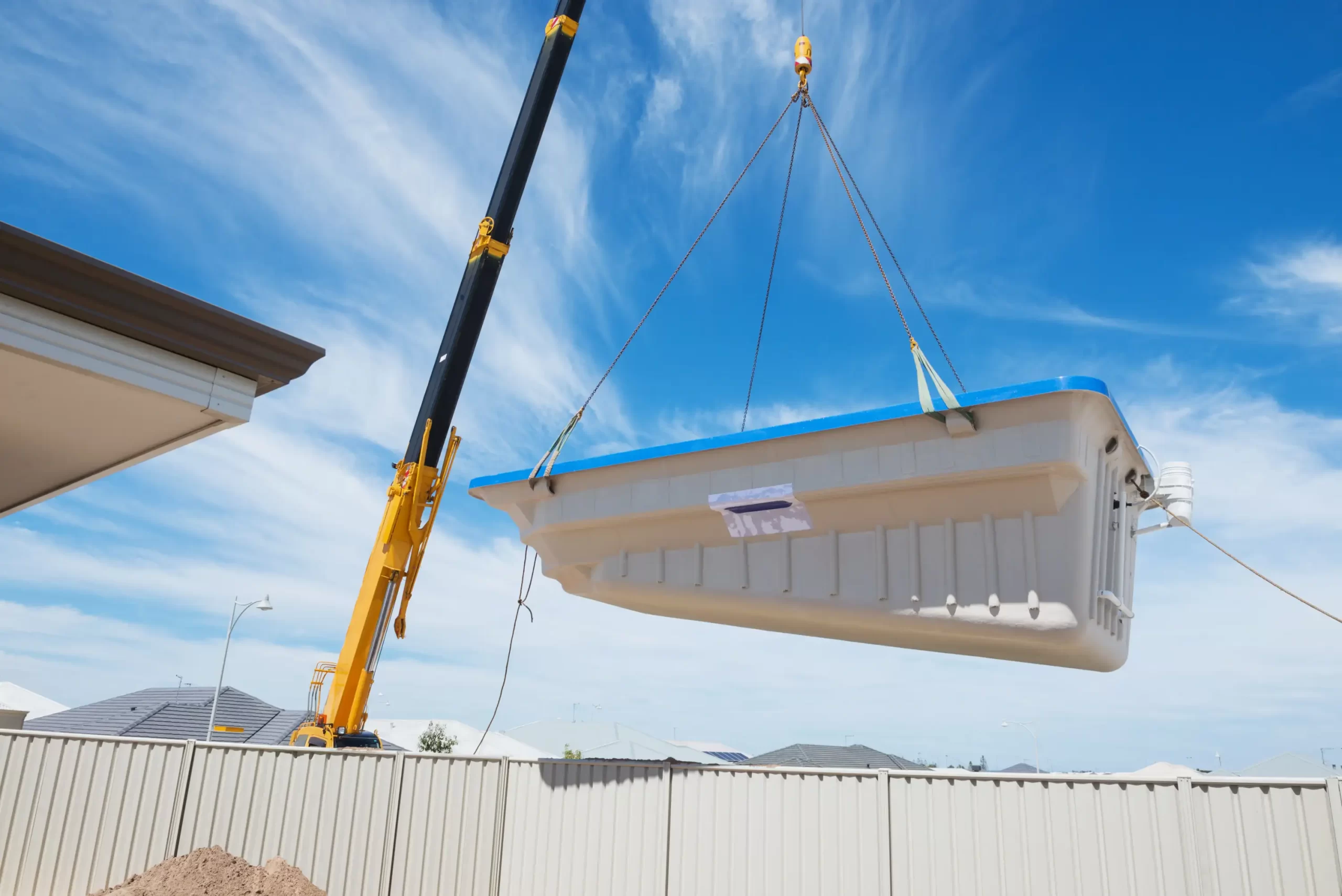
A fully installed pool involves hiring professionals to handle every aspect of the installation, from excavation and plumbing to final touches like landscaping. While this is a more expensive route, typically costing from $40,000, it provides peace of mind and convenience.

  • Pros:
    • Hassle-Free: The pool company manages everything, including permits, trades, and equipment setup.
    • Speed: Professional installation is generally faster and more efficient, often completed in 1-3 weeks.
    • Professional Expertise: With experienced professionals, the risk of costly mistakes is reduced, and the job is done to high standards.
  • Cons:
    • Higher Cost: Fully installed pools are more expensive due to labour, project management and markup costs.

Which Option Is Right for You?

The decision between DIY and fully installed comes down to your individual situation:

  • Budget: If saving money is a top priority, DIY offers significant financial advantages.
  • Time and Skills: If you have the time, some DIY skills, and a willingness to manage a project, DIY could be rewarding.
  • Convenience: If you’d rather leave it to the experts and avoid the stress of managing the installation, a fully installed option is the better choice.

Each approach has its own set of advantages, and the right choice depends on what matters most to you—cost savings, convenience, or control over the process.

Different Types of Water Features for Pools

Different Types of Water Features for Pools

Different Types of Water Features for Pools

Adding a water feature to your pool not only enhances its aesthetic appeal but also creates a relaxing, tranquil environment. Water features come in a variety of styles, each offering unique visual and auditory effects. Whether you’re looking for something simple and elegant or a bold statement piece, there’s a water feature to suit every pool. Here are the most popular types of water features to consider for your pool:

Different Types of Water Features for Pools
  1. Waterfalls

Waterfalls are one of the most popular water features for pools, offering a natural, calming flow of water that can create a tropical or resort-like atmosphere.

  • How It Works: Water is pumped from the pool and cascades over rocks or artificial structures into the pool, mimicking the appearance of a natural waterfall.
  • Types of Waterfalls:
    • Natural Rock Waterfalls: Designed with natural or faux rocks to create a rustic, organic look. Ideal for pools with a tropical or lagoon theme.
    • Sheer Descent Waterfalls: A sleek, thin sheet of water descends in a smooth arc from a hidden edge, creating a modern, minimalist effect.
  • Pros:
    • Creates a soothing sound of running water.
    • Adds a natural or elegant element to the pool design.
    • Can be customised in size and style to fit the pool’s aesthetic.
  • Cons:
    • Whilst it is a soothing sound it can be very loud when near entertaining areas.
    • Higher installation costs, especially for larger or more complex designs.
    • May require additional maintenance to keep debris out of the waterfall.

Best For: Homeowners looking to create a luxurious, resort-like atmosphere with a focal point that enhances both the sight and sound of their pool.

  1. Deck Jets and Laminar Jets

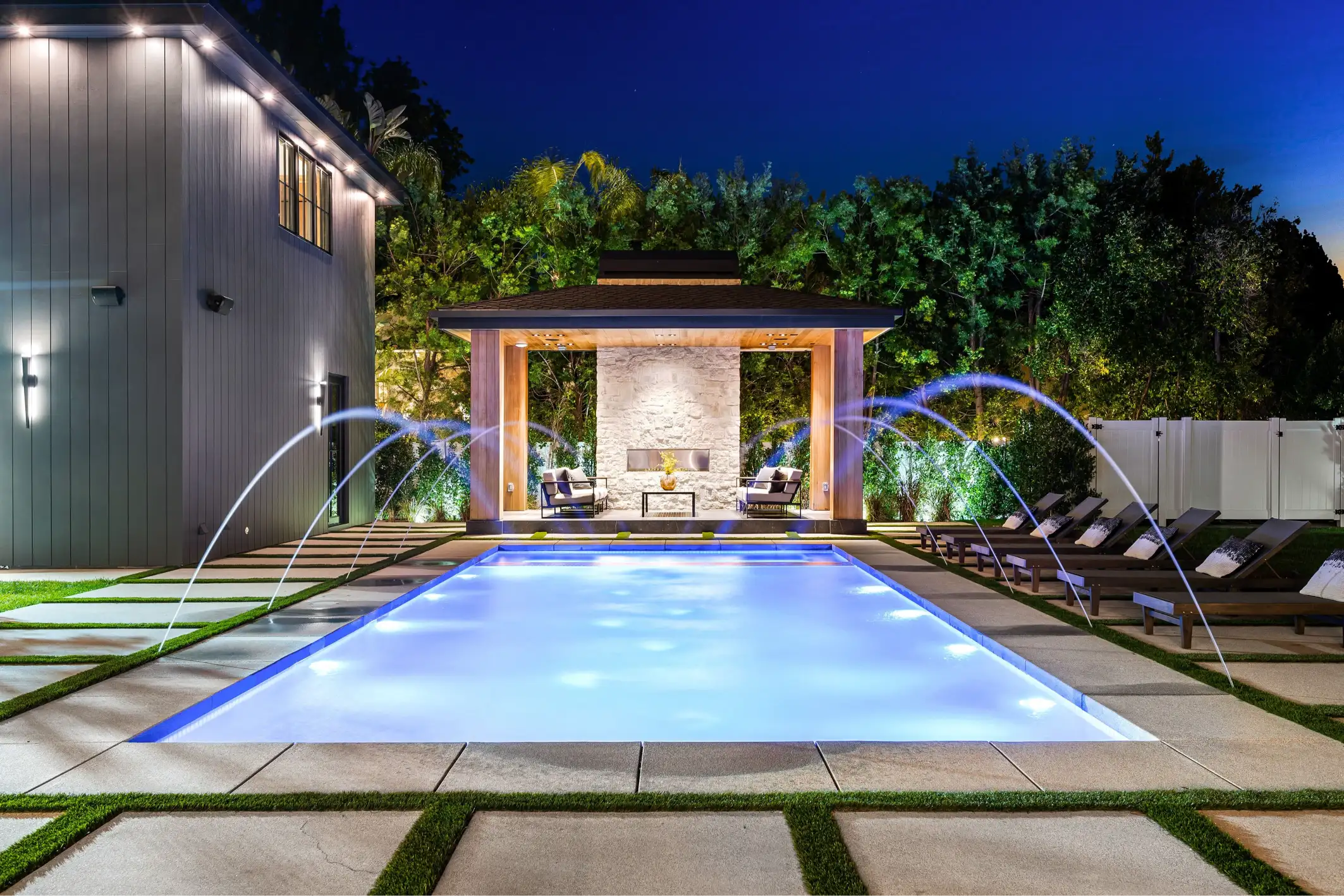
Deck jets and laminar jets are sleek, modern water features that shoot streams of water from the pool deck or surrounding areas into the pool, creating an elegant arc of water.

  • How It Works: Water is pumped through jets embedded in the deck or surrounding area, which then sprays a smooth stream into the pool.
  • Types of Jets:
    • Deck Jets: Shoot streams of water in a simple arc from the deck into the pool.
    • Laminar Jets: Create a more refined, uniform water stream that is glass-like and often illuminated with LED lights for nighttime effects.
  • Pros:
    • Adds a dynamic and playful element to the pool.
    • LED lighting options enhance the jets, creating a spectacular nighttime display.
    • Adjustable streams allow for customisation of height and distance.
  • Cons:
    • More decorative than functional, providing minimal cooling or additional water flow.
    • Requires proper placement to avoid interference with swimming areas.

Best For: Those who want a visually striking yet low-maintenance water feature, ideal for modern or contemporary pool designs.

  1. Bubblers (Fountain Jets)

Bubblers, also known as fountain jets, are small jets installed in the shallow surrounds around the pool or shallow areas of the pool, such as tanning ledges or entry steps, creating gentle water movement and splashes.

  • How It Works: Water is pumped through small jets placed in our around the pool, where it bubbles or sprays upward in a fountain-like effect.
  • Pros:
    • Kid-friendly and fun to play in.
    • Offers a calming water sound and aesthetic.
  • Cons:
    • Not effective in deeper parts of the pool.
    • Can increase water evaporation.

Best For: Families with children or those who want a subtle, interactive water feature that enhances relaxation and ambiance.

  1. Scuppers

Scuppers are small openings in walls or raised surfaces around the pool that allow water to flow through and spill back into the pool, creating a simple and elegant effect.

  • How It Works: Water is pushed through small openings (scuppers) on the edge of the pool, creating a gentle cascade into the pool.
  • Types of Scuppers:
    • Traditional Scuppers: A straightforward flow of water from a slot or pipe.
    • Decorative Scuppers: Feature ornate designs or materials like copper or stone, adding an artistic element.
  • Pros:
    • Minimalist design that fits well with modern and contemporary pool styles.
    • Creates a moderately loud but soothing trickling sound.
    • Easy to install on raised walls or pool edges.
  • Cons:
    • Limited to a subtle water flow, so may not be dramatic enough for those looking for a bold statement.

Best For: Homeowners with raised pools or perimeter walls who want an understated yet elegant water feature.

  1. Sheer Descent and Sheet Waterfalls

Sheer descents or sheet waterfalls produce a thin, uniform sheet of water that flows gracefully from a raised area into the pool.

  • How It Works: Water flows over a lip or ledge, creating a smooth, glass-like sheet of water that falls into the pool. The angle of the descent can vary from straight down to an arc.
  • Pros:
    • Sleek and modern design that enhances contemporary pools.
    • Can be combined with LED lighting for an impressive nighttime effect.
    • Customisable water flow and angle for varying visual effects.
  • Cons:
    • May require higher water pressure, increasing energy use.
    • Less natural compared to rock or stone waterfalls.

Best For: Those who want a sophisticated, modern water feature that adds a visual statement without being overly complex.

  1. Rain Curtains

Rain curtains are a dramatic water feature where a curtain of water falls from an overhead structure, creating the effect of rainfall into the pool.

  • How It Works: Water is released from a slit or holes in a structure (like a pergola or poolside bar), falling in a sheet or curtain of water that mimics rainfall.
  • Pros:
    • Creates a dramatic and soothing rain effect.
    • Can be installed over seating areas for a unique experience.
    • Great visual effect when combined with lights or other features.
  • Cons:
    • Requires overhead installation, which may limit placement options.
    • May be more expensive to install due to structural requirements.

Best For: Homeowners looking for a luxurious, spa-like ambiance or a bold architectural element over seating areas or parts of the pool.

  1. Spillover Spa

A spillover spa is a popular feature where water flows from a raised spa into the pool, creating a continuous flow of water between the two.

  • How It Works: Water circulates between the spa and pool, spilling over the edge of the spa into the main pool.
  • Pros:
    • Combines the relaxation of a spa with the visual appeal of a waterfall.
    • Functional and aesthetic: Provides warmth and relaxation while creating a soothing water flow.
    • Perfect for pools with integrated spas.
  • Cons:
    • Limited placement options, as it requires a raised spa attached to the pool.
    • Additional costs for integrating both systems.

Best For: Those who want the luxury of a spa while also adding a subtle water feature to their pool.

  1. Infinity Edge (Vanishing Edge)

Infinity edge pools, also known as vanishing edge pools, create the illusion that the pool extends into the horizon, with water flowing over one or more edges.

  • How It Works: Water flows over the edge of the pool into a hidden basin, where it is recirculated. The edge blends seamlessly with the surrounding landscape, often creating a “vanishing” effect.
  • Pros:
    • Creates a dramatic, luxurious visual effect.
    • Ideal for pools with ocean views or elevated landscapes.
    • Offers a wow factor for any pool design.
  • Cons:
    • Expensive to install, requiring advanced engineering and design.
    • Requires more maintenance to keep the overflow system functioning smoothly.

Best For: Homeowners with elevated properties or scenic views who want a high-end, resort-style pool design.

Conclusion

Each water feature offers a unique way to enhance your pool’s design, atmosphere, and functionality. From the elegant simplicity of scuppers to the dramatic effect of an infinity edge, there’s a water feature to suit every style and budget. Whether you’re looking to create a tranquil, spa-like environment or a playful, interactive space for family and friends, the right water feature can take your pool to the next level.

Understanding Pool Heating Options: Electric Heat Pumps, Inverter Heat Pumps, Gas Heaters, and Solar Pool Heating

Understanding Pool Heating Options Electric Heat Pumps, Inverter Heat Pumps, Gas Heaters, and Solar Pool Heating

Understanding Pool Heating Options: Electric Heat Pumps, Inverter Heat Pumps, Gas Heaters, and Solar Pool Heating

Keeping your pool warm and extending your swimming season is easier with the right pool heating system. From electric heat pumps and inverter heat pumps to gas heaters and solar pool heating, each option offers different benefits, costs, and performance levels. Here’s a breakdown of how these systems work and which one might be best for your pool.

Understanding Pool Heating Options Electric Heat Pumps, Inverter Heat Pumps, Gas Heaters, and Solar Pool Heating
  1. Electric Heat Pumps

Electric heat pumps are one of the most popular pool heating options because of their energy efficiency and ability to maintain consistent water temperatures.

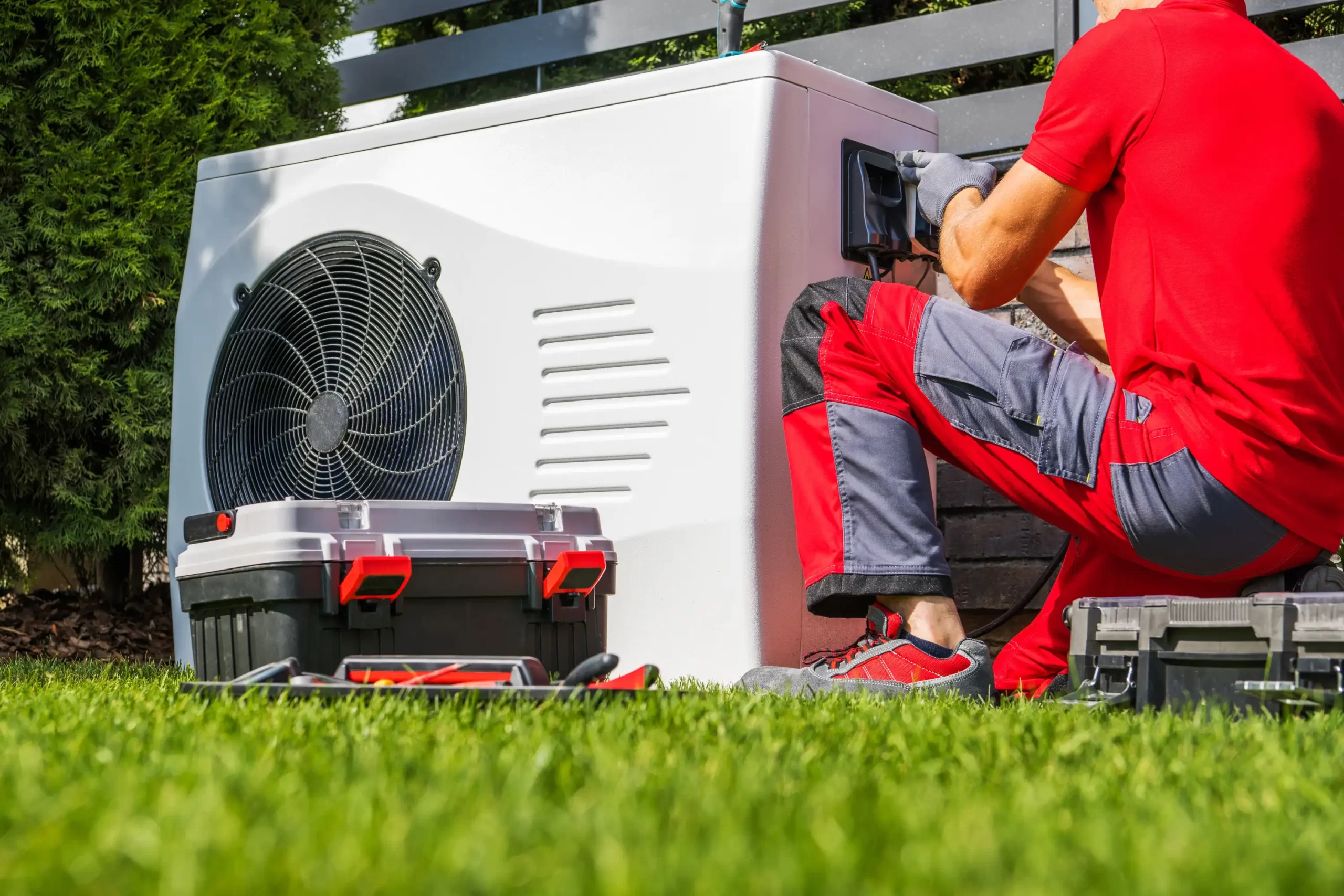
  • How It Works: Electric heat pumps don’t generate heat directly; instead, they use electricity to capture heat from the outside air and transfer it to the pool water. This makes them energy-efficient in warmer climates where there is sufficient ambient air temperature.
  • Pros:
    • Energy Efficient: They use the surrounding air to heat the pool, so they consume less electricity than electric resistance heaters.
    • Cost-Effective: Although more expensive upfront, electric heat pumps are cheaper to run than gas heaters, especially in moderate climates.
    • Reliable Performance: Provides steady heating and works well in climates where temperatures remain above 10°C (50°F).
  • Cons:
    • Slower Heating: Heat pumps take longer to heat the pool compared to gas heaters, so they are better suited for maintaining heat rather than quickly raising the temperature.
    • Temperature Dependent: Their efficiency drops in cooler weather, so they are less effective in cold climates.

Best For: Pool owners in warmer climates or regions with mild winters who want an energy-efficient and environmentally friendly option for maintaining pool temperatures.

  1. Inverter Heat Pumps

Inverter heat pumps are an advanced version of traditional electric heat pumps and provide even greater energy efficiency and temperature control.

  • How It Works: Inverter heat pumps work similarly to standard electric heat pumps but use inverter technology to adjust the compressor speed. This allows the heat pump to operate at varying speeds depending on the heating demand, which greatly reduces energy consumption.
  • Pros:
    • Extremely Energy Efficient: Inverter heat pumps are even more energy-efficient than regular heat pumps because they only use the energy required to maintain the desired temperature.
    • Precise Temperature Control: They provide more consistent temperature regulation and can quickly ramp up or down to maintain the set temperature.
    • Quieter Operation: Inverter heat pumps are quieter than traditional heat pumps since they don’t need to run at full capacity all the time.
    • Works in Cooler Weather: More effective in cooler temperatures compared to standard heat pumps, making them ideal for a broader range of climates.
  • Cons:
    • Higher Upfront Cost: Inverter heat pumps are more expensive to purchase initially than traditional heat pumps.
    • Longer Payback Period: While they save on energy costs, the higher upfront investment may take time to recoup.

Best For: Homeowners who want the most energy-efficient heating system with superior performance and quiet operation, even in cooler climates.

  1. Gas Heaters

Gas heaters are known for their ability to quickly heat a pool, making them a great choice for people who want fast heating for short periods.

  • How It Works: Gas heaters use natural gas or propane to generate heat, which is then transferred to the pool water as it passes through the heater. They are very effective at raising the temperature quickly, regardless of the weather.
  • Pros:
    • Fast Heating: Gas heaters can quickly raise the water temperature, making them ideal for pools that are used infrequently or when you need immediate heating.
    • Not Weather Dependent: Gas heaters work well in all weather conditions, so they are a reliable option for cooler climates or areas with short swimming seasons.
    • Ideal for Spas: They can heat smaller volumes of water, like spas or hot tubs, very quickly.
  • Cons:
    • Expensive to Run: Gas heaters can be costly to operate, especially in regions where gas prices are high or when used frequently.
    • Less Energy Efficient: They are less efficient than heat pumps and solar systems, which can lead to higher long-term costs.
    • Environmental Impact: Gas heaters burn fossil fuels, which contributes to carbon emissions and makes them less environmentally friendly than other heating options.

Best For: Pool owners who need fast heating, such as for weekend use, colder climates, or those with spas or hot tubs who prioritize quick heat-up times over energy efficiency.

  1. Solar Pool Heating

Solar pool heating is one of the most eco-friendly and cost-effective ways to heat your pool, using free energy from the sun.

  • How It Works: Solar pool heaters use panels or collectors to capture heat from the sun. Pool water is circulated through the solar panels, where it is heated by the sun and then returned to the pool. Solar heaters are powered by the pool’s filtration system, so there are no additional fuel costs.
  • Pros:
    • Eco-Friendly: Solar heating is the most environmentally friendly option since it relies on renewable energy from the sun, producing no emissions.
    • Low Operating Costs: Once installed, the system runs on free solar energy, making it almost cost-free to operate after the initial installation.
    • Extended Swimming Season: Solar heaters can extend your swimming season by keeping the pool warm during the spring and fall months.
  • Cons:
    • Weather Dependent: Solar heating is reliant on sunlight, so it is less effective on cloudy or rainy days, or in regions with limited sun exposure.
    • Slow Heating: Solar systems take longer to heat the pool compared to gas heaters and may not provide sufficient warmth during cooler months.
    • High Initial Cost: While operational costs are low, the initial investment in solar panels and installation can be expensive.

Best For: Environmentally conscious homeowners in sunny climates who want a low-cost, long-term pool heating solution and don’t need immediate or rapid heating.

Which Pool Heating Option Is Right for You?

  • Electric Heat Pumps: Ideal for homeowners in mild to warm climates who prioritize energy efficiency and consistent heating but don’t mind slower heat-up times.
  • Inverter Heat Pumps: Best for those looking for the ultimate in energy efficiency, quiet operation, and precise temperature control, even in cooler weather.
  • Gas Heaters: Great for pool owners who want fast heating or live in cooler climates where the pool isn’t used year-round. Also perfect for spas or hot tubs.
  • Solar Pool Heating: The best choice for eco-friendly homeowners who want a long-term, cost-effective solution and live in sunny regions.

Conclusion

Each pool heating system offers unique advantages depending on your needs, climate, and budget. Electric heat pumps and inverter heat pumps provide energy efficiency and consistent heating, making them ideal for regular pool use. Gas heaters are perfect for fast, on-demand heating but come with higher operational costs. Solar heating is the most eco-friendly and cost-effective in the long run but depends on your access to sunlight. By understanding your specific pool heating needs, you can choose the system that will keep your pool warm and ready for swimming all season long.